Skip to Content

Category Archives: PCB Design

Electronic Component Shortages – What To Do When Parts Become Unavailable?

Why component availability matters, and how good electronic engineering and component procurement can reduce the risks.

Electronic component availability has always been an important consideration in product design and manufacture. However, increasing demand from industries such as Artificial Intelligence, Electric Vehicles and Industrial Automation is placing additional pressure on parts of the global semiconductor supply chain.

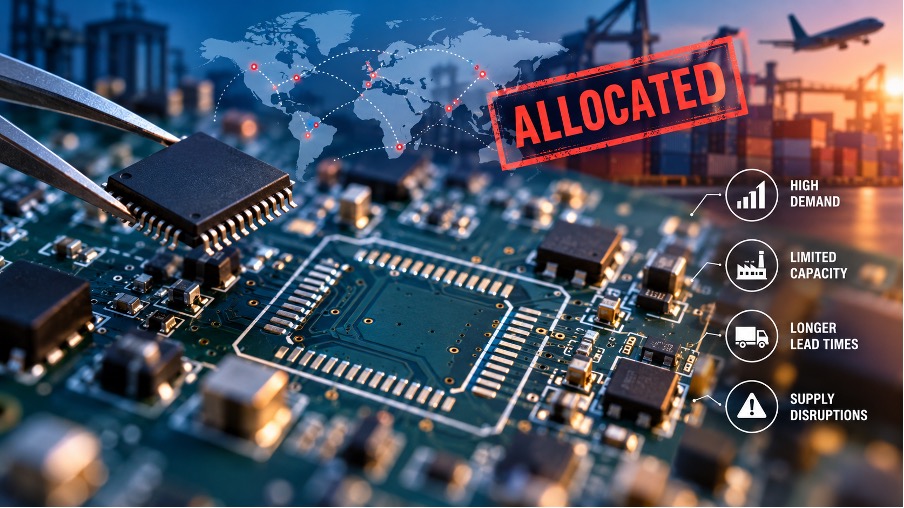
For manufacturers, this can mean longer lead times, higher prices and, in some cases, components becoming subject to allocation.

Understanding these challenges, and planning for them early, can make the difference between maintaining production and facing costly delays.

What is component allocation?

Allocation occurs when demand for a particular component exceeds the manufacturer’s available supply.

Rather than accepting unlimited orders, manufacturers or their authorised distributors, may restrict the quantities available to individual customers, sometimes prioritising existing customers or those with established purchasing commitments.

Even customers willing to pay higher prices may find that the components they need simply aren’t available when required.

Allocation can affect a wide range of electronic components, including:

  • Microcontrollers and processors – from manufacturers such as STMicroelectronics, Microchip, NXP and Texas Instruments.

  • Power management and analogue devices – including products from Infineon, Onsemi and Vishay.

  • Memory devices – where demand from computing and AI applications can influence availability and pricing.

  • Passive components – including capacitors, resistors and inductors from manufacturers such as Murata.

  • PCB materials – where raw material availability and manufacturing capacity can affect both prices and delivery schedules.

Not all products from these manufacturers are necessarily affected. Availability can vary considerably between individual part numbers, and conditions can change rapidly.

Why is allocation happening?

There is rarely a single cause.

Rapidly growing demand from emerging technologies can place pressure on manufacturing capacity, particularly where production requires specialist semiconductor fabrication processes.

Increasing production capacity is expensive and can take years, making it difficult for manufacturers to respond quickly to sudden changes in demand.

The situation can be made worse when customers anticipate shortages and increase their orders to protect future production. This can create a cycle in which apparent demand exceeds actual consumption, further restricting availability.

Geopolitical uncertainty, particularly relevant in today’s international trading environment, together with changes in trade arrangements and disruptions to raw material supplies, can introduce further complications.

What issues could you expect?

Long lead-times -Lead-times are increasing, with some manufacturers quoting anywhere from 30weeks-52.

Increased costs – As demand rises, so to do prices. Franchised routes increase their baselines to match the demand, and stockists buy up stock to sell them for a premium. This further drives the allocation issue, turning it into a vicious cycle.

Counterfeit parts – Grey market supplies come into their element and use the panic to produce counterfeit parts which often go unnoticed.

Production stops – failure to plan leads to production lines stopping. This can haemorrhage money for companies who have no alternate route.

Designing around the problem

At Arrow Technical, we believe that managing component availability should begin at the design stage, rather than waiting until a product enters manufacture.

Where practical, our engineers consider alternative components during development, reducing dependence on a single manufacturer or part number.

This might involve selecting components with compatible alternatives, allowing flexibility in PCB layouts, or identifying alternative solutions that could be introduced with relatively minor design changes.

Our procurement team also works closely with established suppliers to monitor availability, identify potential shortages and source suitable alternatives before problems affect production.

A little forward planning during design can prevent a great deal of expense and disruption later. 

What about the grey market?

When authorised distributors cannot supply a component, manufacturers sometimes turn to the grey market.

The grey market consists of components sold outside the manufacturer’s authorised distribution network. These may include genuine surplus stock, excess inventory from other manufacturers or components obtained through independent brokers.

The grey market is not necessarily illegitimate, and it can provide a valuable source of otherwise unavailable components.

However, it also introduces additional risks.

Components may have been stored incorrectly, handled without adequate electrostatic protection, or supplied without reliable traceability. In the worst cases, parts may be counterfeit, previously used or incorrectly identified.

For manufacturers producing safety-critical or high-reliability equipment, these risks can be particularly significant.

Our approach to alternative sourcing

Arrow Technical’s preference is always to obtain components through manufacturers and their authorised distribution channels.

Where this is not possible, we can investigate alternative sources through established and trusted independent suppliers.

These suppliers employ inspection and verification procedures intended to reduce the risks associated with independently sourced components.

However, inspection cannot eliminate every risk, and the level of testing required depends on the component and its intended application.

At Arrow Technical, we only consider grey-market sources when conventional supply channels have been exhausted, and even then, only with our customer’s prior knowledge and agreement. In these circumstances, we also apply additional inspection and testing procedures to minimise the associated risks.

This ensures that customers understand the options available and can make informed decisions about cost, availability and acceptable risk.

Can we help with your component availability problems?

Whether you are developing a new electronic product or struggling to maintain production of an existing design, early action can help avoid costly delays.

Arrow Technical can review your Bill of Materials (BOM), investigate component availability and identify potential alternatives.

Where necessary, our engineers can also assess the implications of substituting components, including any changes required to the circuit design, PCB layout or firmware.

Are you concerned about component availability?

Send us your BOM or component enquiry and let our engineering and procurement teams investigate the options.

Contact us at [email protected] to see how we can help.
READ MORE

LoRa — When a Little Data Needs to Travel a Long Way

Not every connected product needs Wi-Fi, Bluetooth or a mobile data connection when LoRa is an option.

Sometimes the requirement is much simpler: send a relatively small amount of information, use very little power, cover a considerable distance and do it reliably without adding significant cost or infrastructure.

In those circumstances, LoRa can be a remarkably effective solution.

Long range without high power

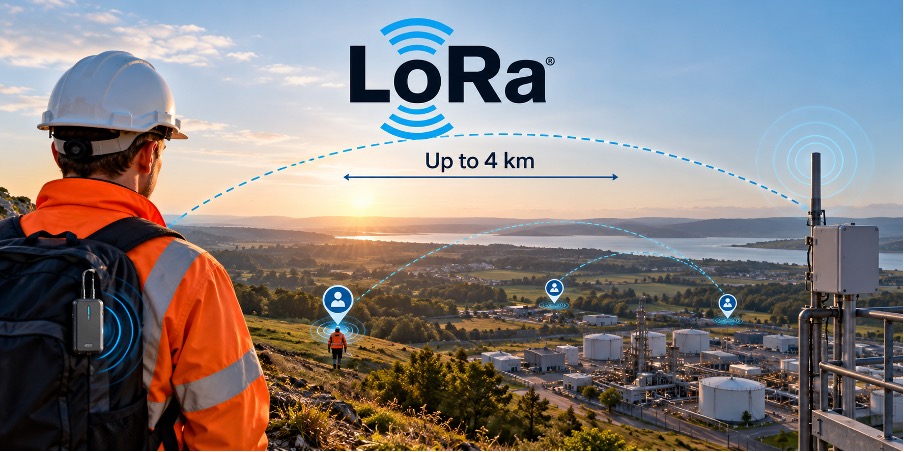
LoRa — short for Long Range — is a low-power radio technology designed specifically for applications where relatively small amounts of data need to be transmitted over much greater distances than would normally be practical with technologies such as Bluetooth or Wi-Fi but it still enjoys the advantage of licence free operation.

At Arrow Technical we have used LoRa in real applications and carried out our own range testing. Under suitable conditions, we have achieved reliable communication at distances of up to approximately 4 km at the full data rate.

That is an impressive distance for a small, low-cost radio module operating at very modest power levels.

Of course, radio range always depends upon the environment. Buildings, terrain, antenna positioning, interference and installation details all have an effect. But even where maximum range isn’t required, LoRa’s generous link budget can provide something equally valuable: robust communications at shorter distances in less-than-ideal conditions.

The trade-off is data rate

There is no magic involved. LoRa achieves its combination of range, robustness and low power consumption partly by accepting relatively low data rates.

If you need to stream video, audio or large quantities of data, LoRa is clearly the wrong technology.

But many electronic products don’t need to do that.

A remote sensor might only need to report a temperature, level, pressure, alarm condition or equipment status periodically. A control system may only need to transmit a few bytes to operate an actuator or confirm that something has happened.

For applications like these, sacrificing bandwidth that isn’t needed in exchange for greater range and lower power consumption can be an excellent engineering trade-off.

Designed for applications where batteries need to last

Low power consumption becomes particularly important when both ends of a wireless system need to operate from batteries.

Applications we have developed using LoRa where both parts needed to be battery powered, had a target operating life measured in years rather than days or weeks.

LoRa lends itself particularly well to these types of application. Devices can remain in very low-power states for much of the time, waking when necessary to exchange relatively small amounts of information before returning to sleep.

This can make applications practical where regularly changing or recharging batteries would be inconvenient, expensive or simply unrealistic.

Useful in difficult and hazardous environments

Low-power operation can have advantages beyond simply extending battery life.

It can also be particularly valuable when designing equipment for difficult or hazardous environments. In applications requiring intrinsically safe equipment, controlling the amount of electrical energy available within the equipment is a fundamental part of the design.

At Arrow Technical we are currently working on LoRa-based equipment for which intrinsic safety certification is required in several international regions. Certification is underway as the products are progressing through that process.

LoRa does not itself make a product intrinsically safe — the complete product electronic design, including its energy storage, circuitry, component selection, PCB design and construction, has to be designed and assessed accordingly.

However, the very low power requirements possible with LoRa can make it an attractive communications technology when developing battery-powered equipment for these demanding environments.

LoRa doesn’t necessarily mean LoRaWAN

LoRa and LoRaWAN are sometimes used as though they mean the same thing, but there is an important distinction.

LoRa is the underlying radio technology. LoRaWAN is a networking protocol built around it, allowing devices to communicate through gateways and potentially onwards to internet or cloud services.

For some applications LoRaWAN is exactly what is required.

For others, a much simpler direct LoRa point-to-point or local network may be preferable. If all that is required is for a handful of devices to communicate across a site, there may be little benefit in adding unnecessary network infrastructure or cloud services.

As always, the right solution depends upon what the product actually needs to do and Arrow Technical are experienced and well placed to advise how best to deploy it.

Choosing the technology to suit the problem

LoRa isn’t a replacement for Wi-Fi, Bluetooth, Matter, cellular communications or other wireless technologies. They each solve different problems.

But where the requirements include:

  • relatively small amounts of data;
  • very low power consumption;
  • battery operating life potentially measured in years;
  • long communication distances;
  • robust operation;
  • relatively low hardware cost; and
  • little or no existing communications infrastructure,

LoRa deserves serious consideration.

The important part of designing a wireless product isn’t choosing the newest or most fashionable technology. It is choosing the technology whose characteristics best match the application.

At Arrow Technical, we have practical experience designing LoRa communications into electronic products — including battery-powered tracking systems, low-power product design and real-world long-range testing.

If you have a product that needs to communicate reliably over a significant distance — particularly where power, cost or the operating environment present additional constraints — send us the requirements and let our engineers take a look. LoRa may provide a much simpler solution than you expect.

READ MORE

Advanced Test Services

We are already well known for developing advanced electronic products for numerous blue-chip clients. Most people are aware that we design products from an early idea to a fully working prototype. However, fewer people are aware that our technical services extend way beyond the creation of a prototype and that we follow the project through to volume PCB Assembly (PCBA).

Most modern products which are sold in the UK, EU and further afield such as the Middle East, Australasia and Northern America must be tested to various national standards which apply in each geographical region around the world, and this can be extremely expensive to the uninitiated.

Arrow Technical have been advising clients how to meet the different technical standards, such as UKCA, CE, UL and ISO for many years and we work closely with several test houses who provide qualified test reports, traceable to national standards, to prove the product under test does indeed meet the appropriate standards required for sales into a specific market.  We also prepare Technical Construction Files as some product types require – especially electronic ones.

Testing to national standards is a time consuming and expensive process and it is only valid when done on a production ready sample as will be sold. It is not unusual, for some people to consider their electronic product’s compatibility only right at the end of the design process when the cost of making any late alterations to the electronic design or PCB layout adds precious time and additional cost to the overall process of making the product meet the required standard.

Using our in-house test facility, we can design and test the performance of the product for EMC compatibility, electrical safety and general UL compatibility from the start and if we spot anything unusual then we have plenty of time to identify the problem and fix it.  When we are happy that the product meets our in-house pre-compliance tests then we are reasonably certain that we will get a satisfactory result when the final product is submitted to a (expensive) certified test house.

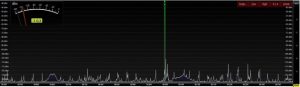
RF Emissions

RF Emissions Spectrum


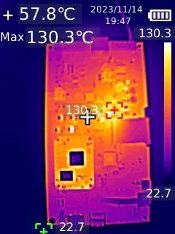
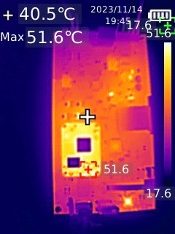
Depending on the product type, we also do reliability testing such the example shown below.  Functionaly and visually, the prototype worked perfectly but when viewed by our thermal imaging system then an undesireable hot-spot became apparent.  After about half an hour of testing we measured temperatures up to 130C which would degrade the component over time and it would eventually fail.  After the redesign we only recorded temperatures around 50C which would extend the product life significantly.


PCB Assembly (PCBA)

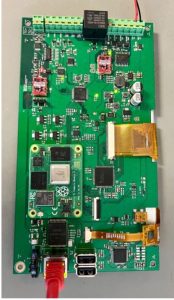
Visual Image

PCB With 130C Hotspot

Thermal Image with 130C Hot-Spot

PCBA

No Hotspot


READ MORE

Electric vehicle battery breakthrough coming soon!

With much of the talk in recent years gearing towards Elon Musk’s views concerning the Electric vehicle, it is a breath of fresh air to hear from somebody new. Musk’s dramatic market breakthrough made with Tesla put him in a leading position and it‘s now hard to see how he leaves much room for any other upcoming or established manufacturers of electric vehicles to make their own mark. This breakthrough was displayed by his ability to show how electric vehicles can be manufactured reliably and sold to the general public in relatively large quantities. Not only that but he made them fun, stylish and enjoyable to drive which was arguably lacking in the market for electric vehicles before that time. But, it appears that Elon has posed an interesting question during an earning call with a select audience. The question posed was “Can somebody please come up with a battery breakthrough? “. This was brought on by recent news of Toyota working on a solid state battery informed to him during the earning call. Solid State batteries are still a relatively unproven technology with regards to powering a car.

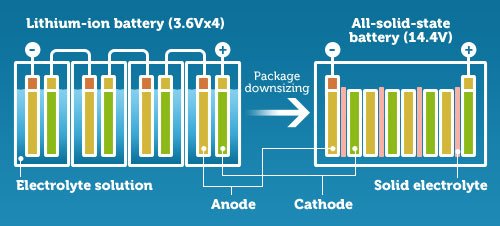
The Major difference between what Tesla uses currently in their range of vehicles (Lithium-ion Battery) and Solid state batteries is that the commonly used Lithium-ion makes use of a liquid electrolytic solution to regulate flow of current. On the other hand, solid state batteries incorporate a solid electrolyte. Although these changes still do not affect the fundamental way the battery works, it does change some performance specifications such as maximum storage capacity, charging time, size and safety. So you can see how this would be beneficial to the Electric Vehicle industry. It does come with its drawbacks though which is currently the cost. As a Product development consultancy, we would generally suggest a solid state battery if the customer is willing to accept the higher price tag.

Electronic circuit design

Size comparison

Recent news of Toyota developing a Solid state battery technology has been noted by the CEO of another Electric Vehicle company, rivalling Elon Musk’s Tesla, named Henrik Fisker. The name may sound familiar as he is the founder of Fisker Automotive. The company arrived on the electric vehicle scene in 2007 and shortly afterwards went bankrupt but they have recently started up again under the name Fisker, Inc. Henrik has stated that on his upcoming luxury electric Sedan, to be named “Emotion”, instead of using the Lithium-ion battery option his team are currently just months away from adding the final design touches for a solid state battery that will be used to power the Sedan instead. This breakthrough means that Fisker could pose a serious threat to Tesla in the luxury electric car market in terms of performance and we could also be seeing a wider variety of such vehicles on our roads soon.

Clever Electronic circuit designs to pair with the batteries will play a vital role in monitoring and ensuring the performance and safety of the batteries into the market. Arrow Technical are at the forefront of electric car drive, transmission and control systems where advanced electronic controls plays an increasingly crucial part of the entire system. Low-cost, compact, efficient and modular electronics are critical design parameters for this rapidly growing segment of the automotive industry and Arrow Technical are proud to play their part in its development.


READ MORE

New application discovered for LED’s… to help see through flames!

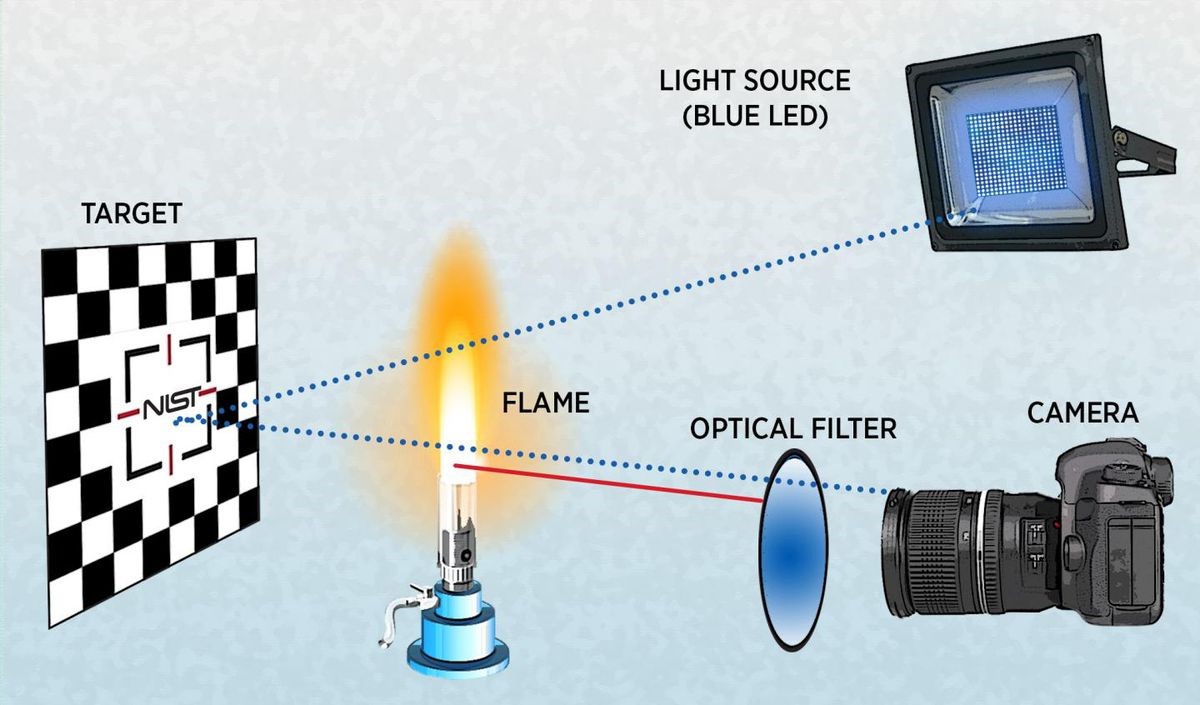
Usually seeing through the flames of a fire is nearly impossible, which poses a big challenge for firefighters and the manufacturers of building materials. It’s interesting to discover that researchers have now uncovered a way to see through the flames produced by a fire with just two readily available pieces of equipment. These are a Camera fitted with an optical filter and a light source which emits a blue light using LED’s (Light emitting diodes). So, Good news for LED Circuit Design enthusiasts.

The task given to the researchers was to understand how a fire destroys a structure, these tests were run in their own laboratory and on test buildings. Previously, measurements were taken before and after the fire, furthermore following the fire a model would be produced by them showing how the fire progressed to achieve the measurement taken after the fire. The problem which the researchers found with this approach is that a high degree of guess work was involved during the duration of the fire where they simply couldn’t see what was going on beyond the flames. It is critical to know how and exactly when certain items are destroyed by a fire.

Another problem faced by the researchers was that most tools and sensors do not work reliably when subject to extreme heat, even at a distance. Also a camera alone with an optical filter to provide an image of the fire was still unclear and mainly drowned out by flames and created an overwhelmingly red theme. So, the image was pretty useless for the objectives of the researchers which was to see inside the fire in real-time.

This is where the blue light source comes into play, Blue lights have previously been used to view hot materials but never in this extreme application. Researchers discovered that whilst illuminating the fire with these powerful LED’s and recording at the same time with the camera they could actually see beyond, through the flames. This has proved to be a ground breaking discovery and now is being used to determine how building materials are affected by the flames.

Here at Arrow Technical we regularly work with LED’s in numerous lighting applications from LED Circuit Design to various electronic volume manufacturing solutions which incorporate the use of lighting LED’s. So, it is eye opening to see the various other applications in which they can potentially be used. We will be keen to follow how this technology could be formed to potentially aid our fire services.   We have already designed other products for advanced firefighting such as head-up displays, breathing monitoring to prevent hyperventilation and advanced inertial guidance systems to lead fire crews through environments when traditional compass and GPS instruments will not work. Please view our Services page to see if we could be of any assistance.


Graphic created by N. Hanacek/NIST based on a concept by M. Hoehler/NIST  Read more here…


READ MORE

We are so much more than just an electronic design house!

We are so much more than just an electronic design house!

Many people know Arrow Technical as just an Electronic Design company, being a designer of advanced new electronic products, but we are so much more than simply that. As well as designing new products we also manufacture them in-house and all under one roof. And, it doesn’t stop there.  Many times we are required to design products which interface by wire or wirelessly to other systems located either locally or remotely.  We are regularly asked to develop and supply the entire system at both ends so it’s a single point of contact to get the whole job specified and done.

In this respect, we do PC and mobile phone apps.  We also design and supply advanced PLC based control panels (and simple ones) and write advanced industrial control and monitoring software to run on them, e.g.

  • Connection to SCADA – no problem
  • Connection to remote servers and platforms – no problem
  • IoT based products and Cloud services to interface to them – no problem.
  • Battery power – no problem
  • High power, even very high power – no problem

Go to our service page and see the full range of services we provide to our clients.  You might be surprised with the range of services we can offer.

We have had over 20 years developing class leading solutions for industry, science, medicine, military and the home.  We have a huge library of functions and features we can put together to define a new product for a specific market, quickly, reliably and very cost effectively.  If its electronic and you need it, we have probably already done it before, or something very similar.

Give us a call and don’t hesitate to get in contact.  Get in touch if you would like to learn more on our Contact us page.

READ MORE

New Technology emerges from Apple to reduce tech-induced distractions!

New Technology emerges from Apple to reduce tech-induced distractions! 

As Product Development Consultancy its nice to see new technology has been announced from Apple Inc. with a new range of features aiding users to monitor their own Mobile device. This new feature will be featured as a part of the forthcoming IOS 12 Software. It will compromise of a weekly report that shows users in which areas they are most using their devices. This data will then help the user to identify in what ways their mobile device is most distracting them. As Product Development consultants Arrow Technical regularly monitor the inspiring ongoing developments at Apple to ensure the technology we develop is in tune to the leading market trends.

Apple have also enabled the feature to send out reports to any parents’ phone from their children’s and to set time constraints on application usage. With Mobile devices being such a big part of today’s society it has been recognised that usage can affect the mental health of users, particularly children. Here at Arrow we work within the Medical Product design industry amongst others so we know just how much of an impact this simple yet effective innovation could have.

More features include a new updated Do not Disturb feature, a new bedtime mode which will enable user to dim their screen and hide notifications until morning. As well as new group calling capabilities on Face time for up to 32 people.

It’s great to see Apple offering innovative products with the consumer’s mental health at the forecourt. With most of society being geared towards a features arms-race, offering technology which trumps other mobile device manufacturers, the actual long term health effects of extensively using their products for the consumer can often be overlooked. You can’t change what has happened, you can only control how you react in future.

We support these kind of considerations in advanced product developments.  It’s in tune with Arrow Technical’s inherent design philosophy that technology should work in harmony with the human race and make us better people and not be worse off for the experience.

Read More here…

http://www.itv.com/news/2018-06-04/apple-announces-new-digital-health-tools-to-reduce-tech-distractions/

READ MORE

Happy New Year from the Arrow Team!

Hi All,

We hope everyone has had a great Christmas & New Year break. We have definitely enjoyed our much deserved break and are all refreshed, raring to get back working as a team.

We look forward to what the world of Electronic product design & manufacturing has to offer us this Year.

We would like to take this opportunity to wish all our customers, suppliers and many friends throughout the industry a happy, healthy and prosperous new year.

We will be spending this great year doing all we can to provide our wonderful customers, and hopefully, many more new customers, with the best possible electronic design services we can. Check out our electronic design services here and become one of our customers this year. We hope to prosper more than ever this year and we’d love you to come along on this journey with us, keep visiting our site to stay updated.

READ MORE

Arrow Technical Services Breaks All Sales Records

Our new financial year has started with a storming sales performance.  Results for our first quarter show that we are more than 50% up on the same time last year and 7% above our previously recorded best quarter ever with plenty more to come.

This result is particularly pleasing as it has required the whole team to pull together and get numerous jobs through the door.  Teamwork has been the key to our success and we look forward to plenty more quarters like this one. We are confident that we will be able to continue with fantastic work like this, and we will break this record many times more in the future!

The result reflects our increased activity in electronic contract PCB assembly across many industries and an increased presence particularly in Medical, Industrial, Automotive and Scientific electronic product development.

Wonder what the team are going to spend their bonuses on?

READ MORE

Eggcellent news! Eggs offer surprisingly good electrical performance

electrical research
electrical performance from egg

Egg-based electronics’ offer surprisingly good electrical performance. Egg white also known as egg albumen is not only good-tasting, it also has very good dielectric properties. It boasts a high transparency and high elasticity. This makes it a promising material for fabricating transparent, flexible electronic devices. In a new study, researchers have shown that when egg albumen is mixed with hydrogen peroxide a series of chemical reactions occur that transforms the bio material into an active film. This can then be used to make transparent, flexible resistive memory devices.

This is not the first time that egg albumen has been incorporated into electronic devices. Previously, the albumen from chicken and duck eggs has been used in transistors and other devices as the dielectric (insulating) layer. However, the new work marks the first time that egg albumen has been used to make resistive memories. These memories are being developed as a next-generation alternative to the silicon-based memories that dominate today’s electronics.

Here at Arrow we will be keen to get our hands on them and test against the silicone based products, if they do come to market that is!.
The Research is ongoing at the Southwest University in China. If you want to find out more about this electrical breakthrough follow the link below.

READ MORE